A smarter approach to home energy: combining solar, battery storage and efficient heating to reduce household running costs.
Location: Port Sorell, Tasmania
Services: Solar PV, EV Charging, Battery Storage, Ducted Heating & Cooling, Electrical
Project Team: Degree C Solar & Heating and Cooling
More Than Just a Solar Installation
When Port Sorell homeowner Bill first contacted Degree C, he was looking for a solar solution that would help reduce his household electricity costs.
Having recently purchased the property while still living in Queensland, Bill was preparing for a very different Tasmanian climate. His new home was large, with significant heating requirements, and his goal was simple: to get his electricity bills as close to zero as possible.
What began as a solar enquiry quickly developed into a much more comprehensive energy solution.
Through collaboration between Degree C Solar Coordinator Luke Vos and Heating & Cooling Sales Manager Matthew Baldock, the project evolved into an integrated installation combining a substantial solar PV system, battery storage and two energy-efficient ducted heat pump systems.
Rather than simply installing enough solar panels to offset the home's existing electricity consumption, the team looked at how that energy was being used and where efficiencies could be made first.
The result was a system designed around the way Bill and his wife actually live, with the aim of significantly reducing their reliance on grid electricity and avoiding another expensive quarterly power bill.
The Challenge: A $3,400 Quarterly Power Bill
Bill's introduction to Tasmanian energy costs came as something of a shock.
After relocating from Queensland, he quickly discovered just how much energy was required to keep his new home comfortable through a Tasmanian winter.
"The real first power bill was $3,400 for the quarter."
— Bill, Homeowner
The property relied heavily on electric underfloor heating, creating an enormous electrical demand. There was also gas infrastructure on site, adding another consideration to the home's overall energy costs.
During his initial assessment, Luke recognised that simply adding solar panels wasn't necessarily going to deliver the best financial outcome.
The existing heating demand was so significant that offsetting it through solar and battery storage alone would require a much larger investment.
Luke also discovered that the high electrical load associated with the floor heating had contributed to blown service fuses.
It became clear that the most effective solution wasn't just about generating more electricity. It was about reducing the amount of electricity the home needed in the first place.
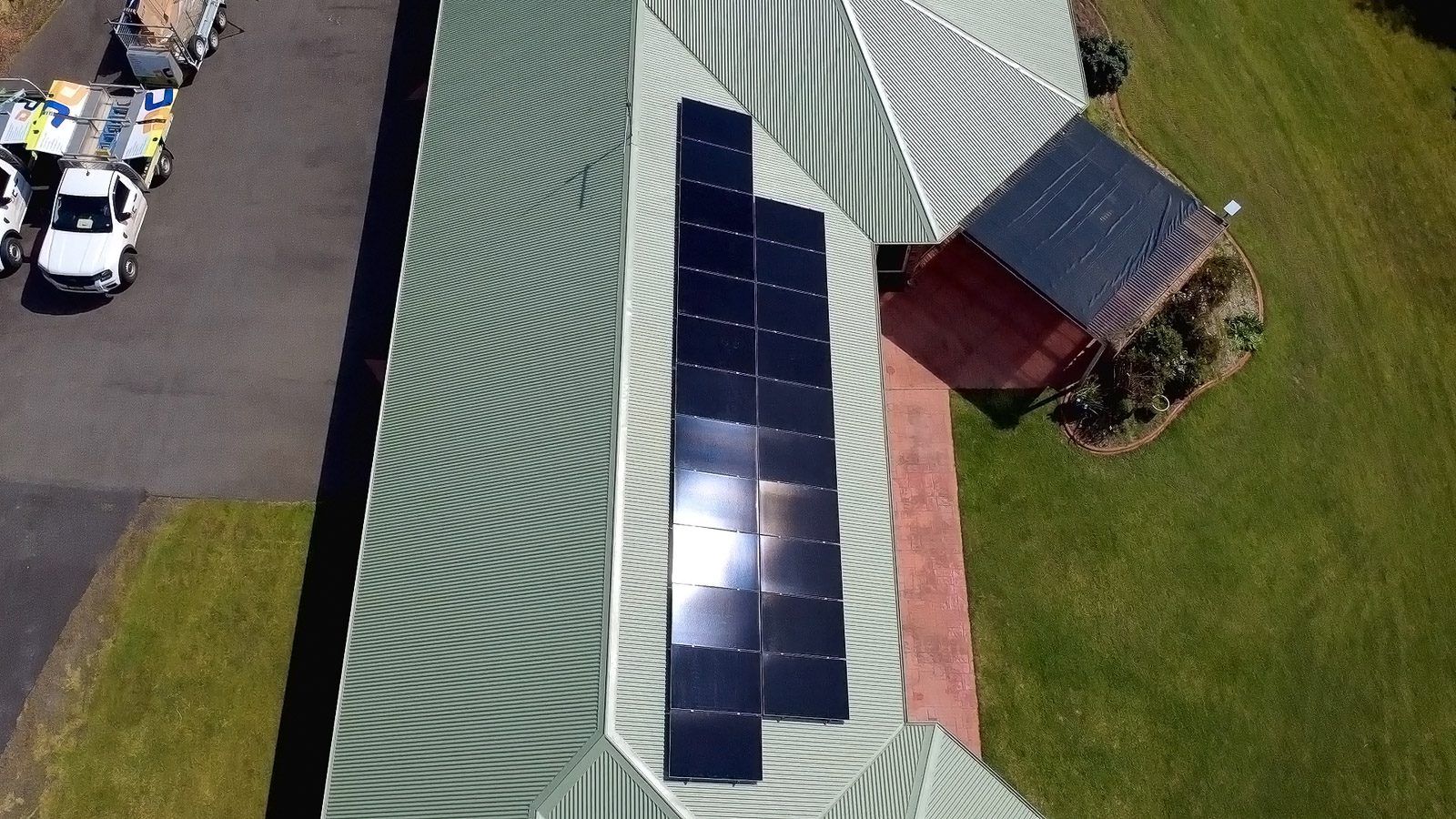
Our point of difference – we’re not just selling solar; we design the right solution for your home and usage.
For Luke, the project presented an opportunity to take a whole-of-home approach to energy efficiency.
The initial consultation had taken place over the phone, with Bill still residing in Queensland. Luke reviewed aerial imagery of the property and discussed the available options before visiting the home in person.
Once on site, he identified the existing heating arrangement as one of the biggest opportunities for improvement.
"When it comes to bringing his consumption down, it lets us have less solar and less batteries." — Luke Vos, Solar Coordinator
Luke knew that if the home's heating demand could be reduced, the solar and battery system could be designed more efficiently, potentially avoiding unnecessary equipment and installation costs.
Rather than working in isolation, Luke brought Matthew Baldock from our Heating & Cooling team into the conversation.
Together, they assessed the property's energy requirements and developed a solution that considered heating, cooling, solar generation, battery storage and electric vehicle charging as part of one overall system.
This collaborative approach was central to the project.
By addressing the home's largest energy demand before finalising the solar design, the team could develop a more practical and cost-effective solution for Bill's long-term needs.
Rethinking the Heating: Two Ducted Heat Pump Systems
Following Luke's initial assessment, Matthew visited the property to investigate the available heating and cooling options.
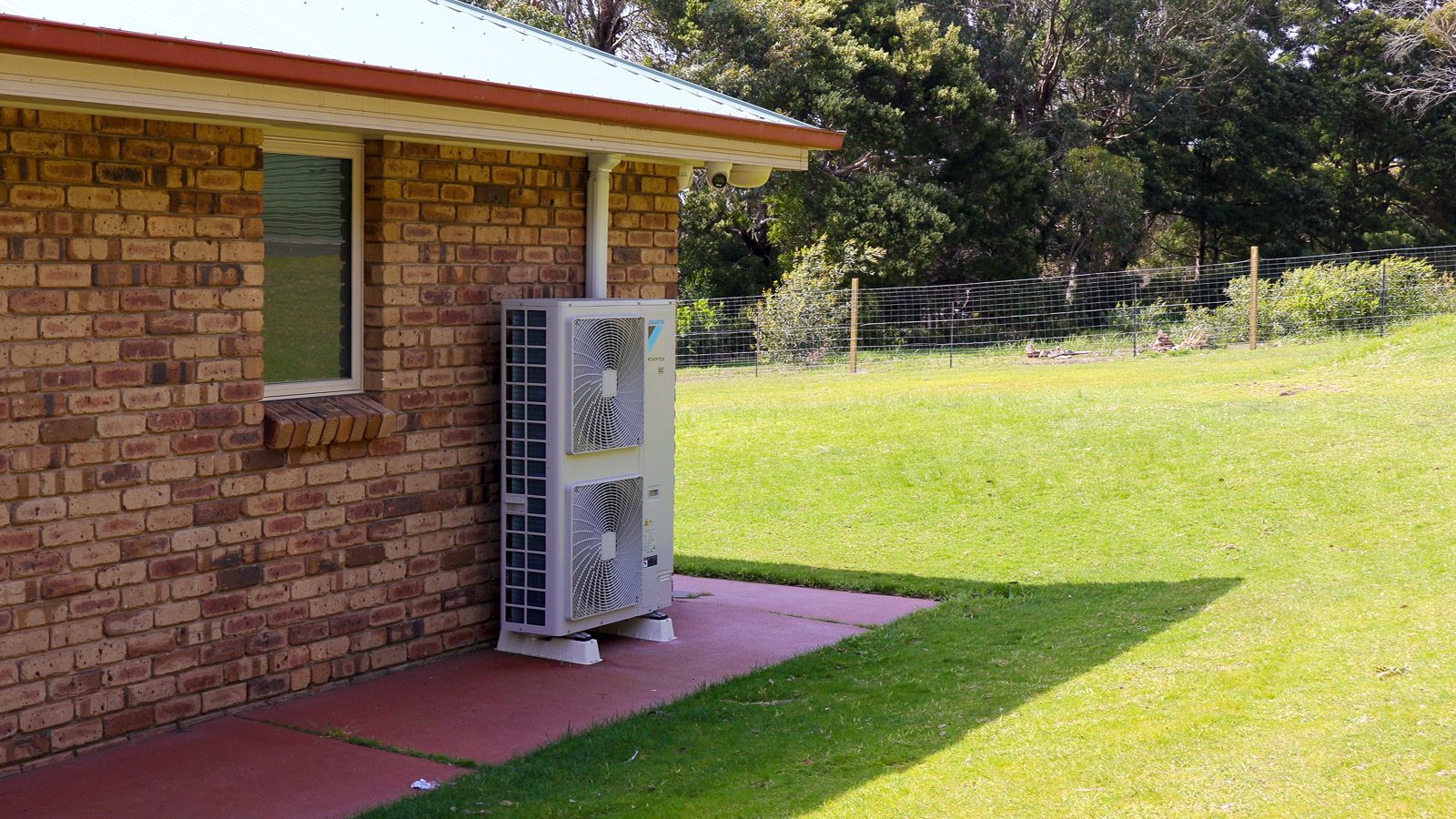
The home's generous roof space made it suitable for ducted heat pump systems, providing an opportunity to replace reliance on the existing energy-intensive floor heating with a more efficient and controllable solution.
Matthew designed a configuration using two ducted heat pump systems, both operating through MyAir zoning technology.
The zoning functionality was particularly important given the size and layout of the property.
One section of the home, described by Matthew as the guest wing, was not occupied all the time. Under the previous heating arrangement, energy could be consumed heating areas that weren't being used.
With the new ducted systems, Bill and his wife can heat the areas they occupy while switching off heating to unused sections of the house.
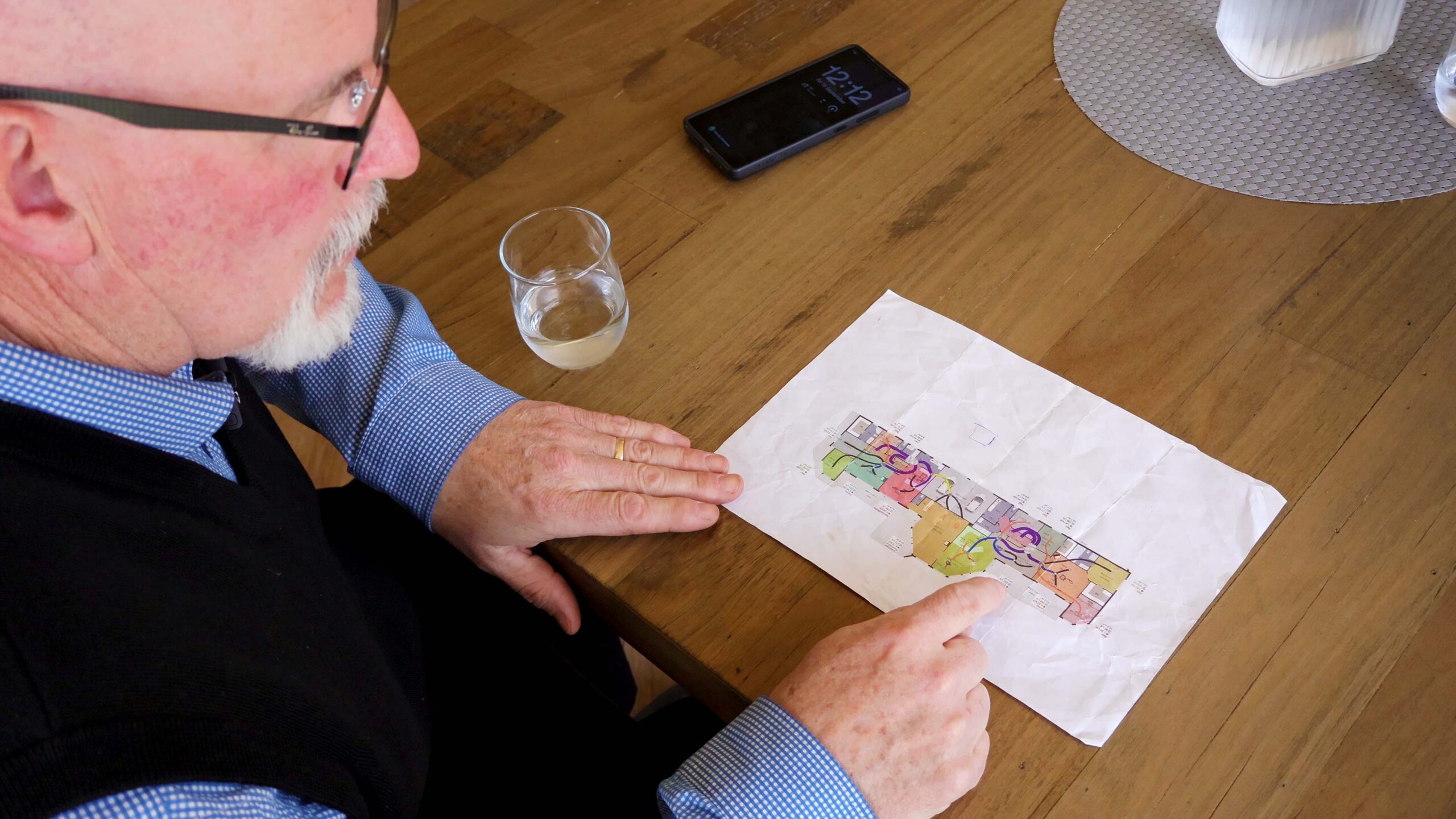
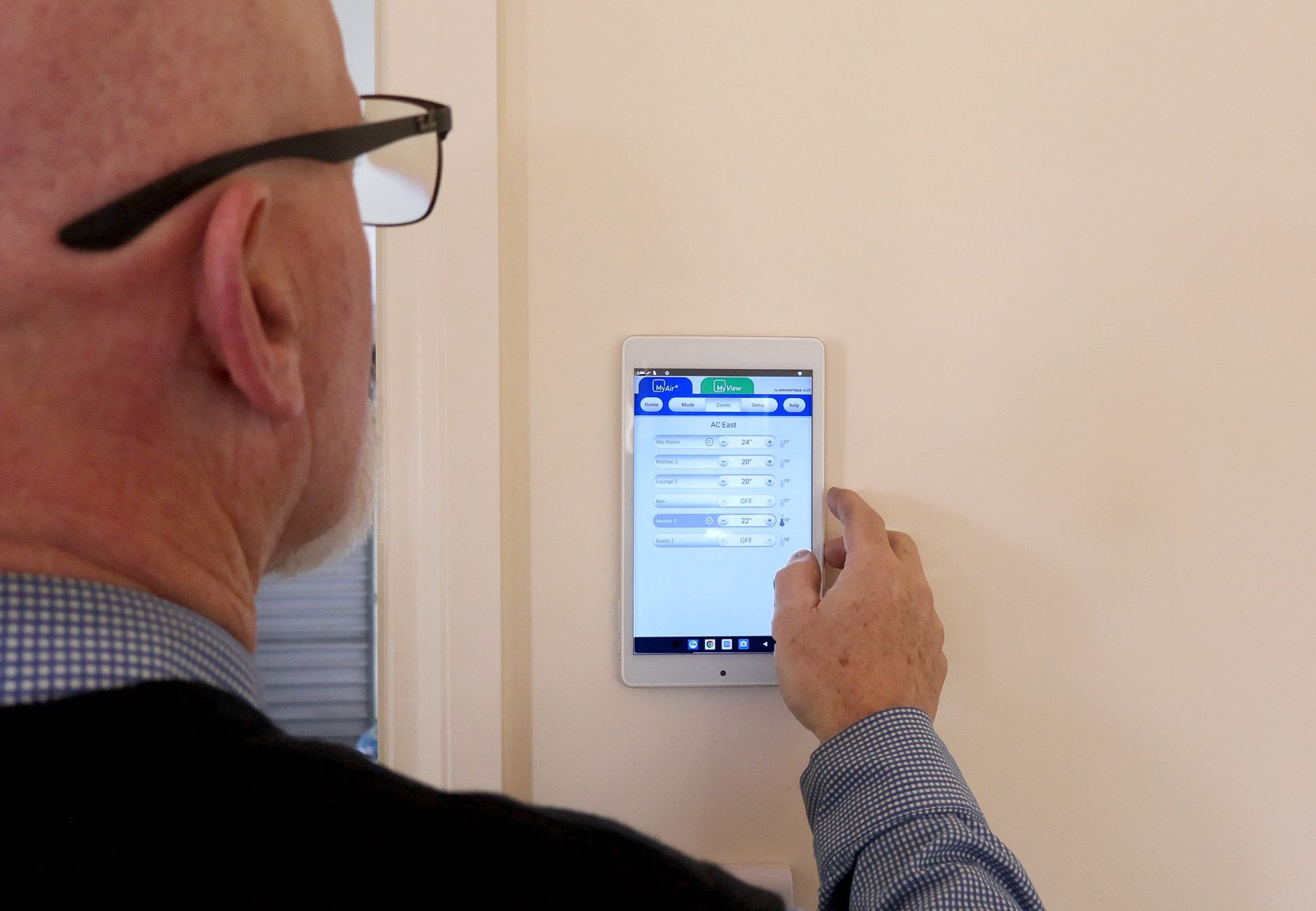
"When no one else is here except him and his wife, they'll live in their section of the house and comfortably heat any room with the MyAir zoning system."
— Matthew Baldock, Sales Manager
This level of control means the homeowners no longer need to heat the entire property to remain comfortable.
The result is a much more flexible approach to home heating, designed to reduce unnecessary energy consumption while maintaining comfort throughout the year.
Why Heating Efficiency Matters When Designing Solar
A home's heating and cooling requirements can have a significant impact on the size and cost of a solar installation.
In this case, Luke estimated that the original heating arrangement could create demand approaching 100kW, compared with a substantially lower (less than half) maximum demand after incorporating the heat pump solution.
Reducing that demand meant the solar installation could be designed to support a more efficient home rather than compensate for an unnecessarily high electrical load.
It is an important consideration for homeowners exploring solar, particularly those with large properties, older heating systems or significant winter electricity bills.
The most effective solar solution doesn't always start on the roof. Sometimes it starts with understanding what's using the power inside the home.
The Solar and Battery Installation
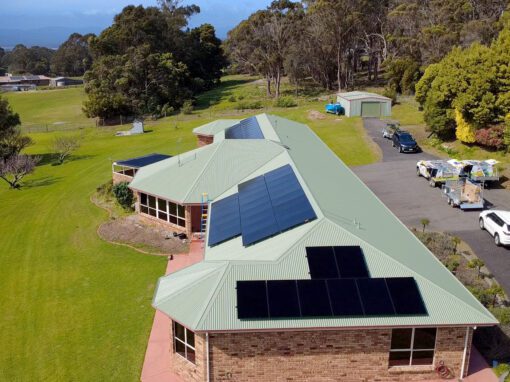
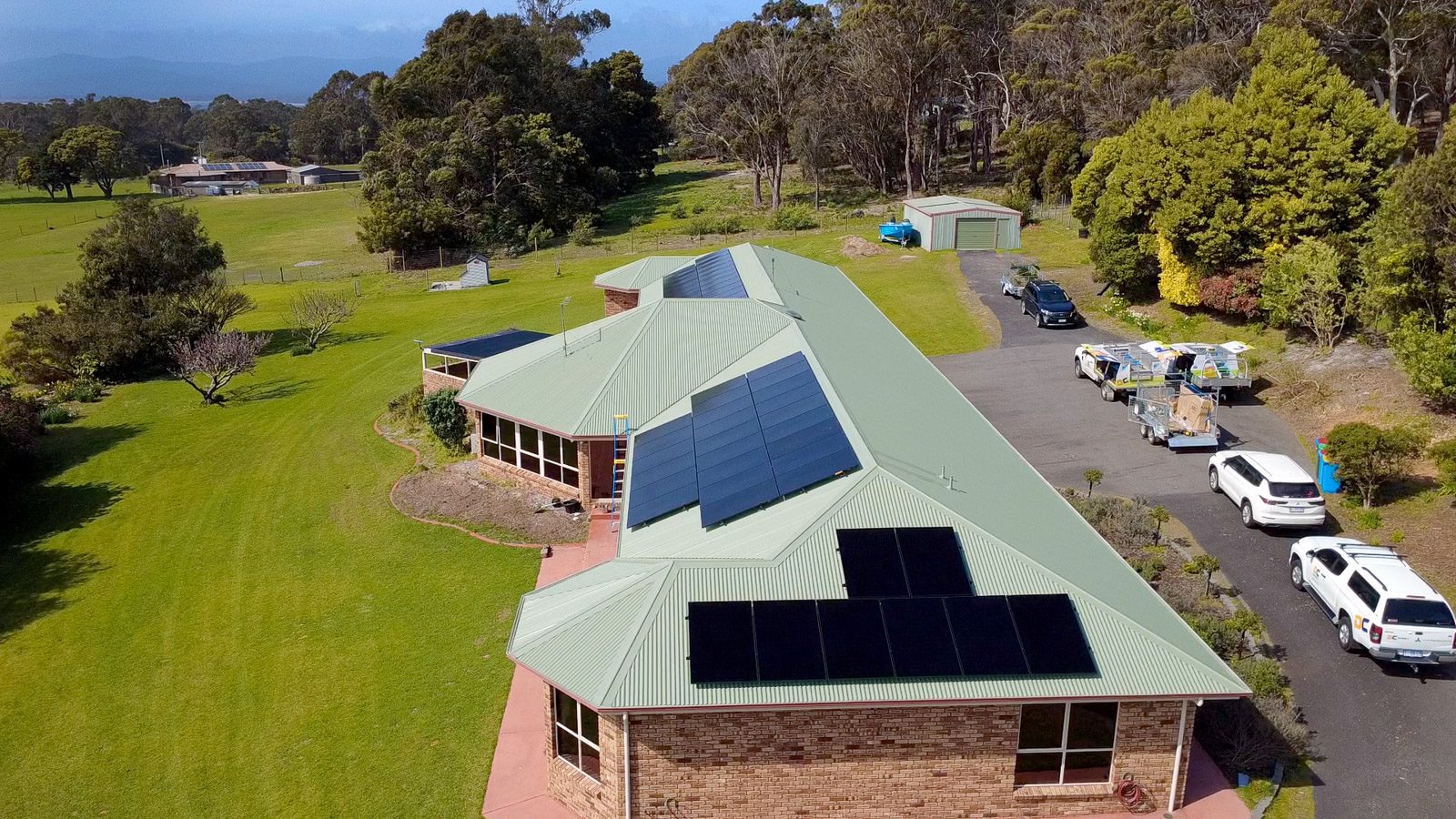
With the heating solution incorporated into the overall design, our solar team developed a substantial renewable energy system to support the property's requirements.
The installation includes:
- Approximately 50kW of rooftop solar PV capacity.
- 48kWh of battery storage across six battery modules.
- A 30kW Sigenergy inverter.
- An integrated Sigenergy energy management ecosystem.
- Provision for future system expansion.
- Consideration for charging the household's two electric vehicles.
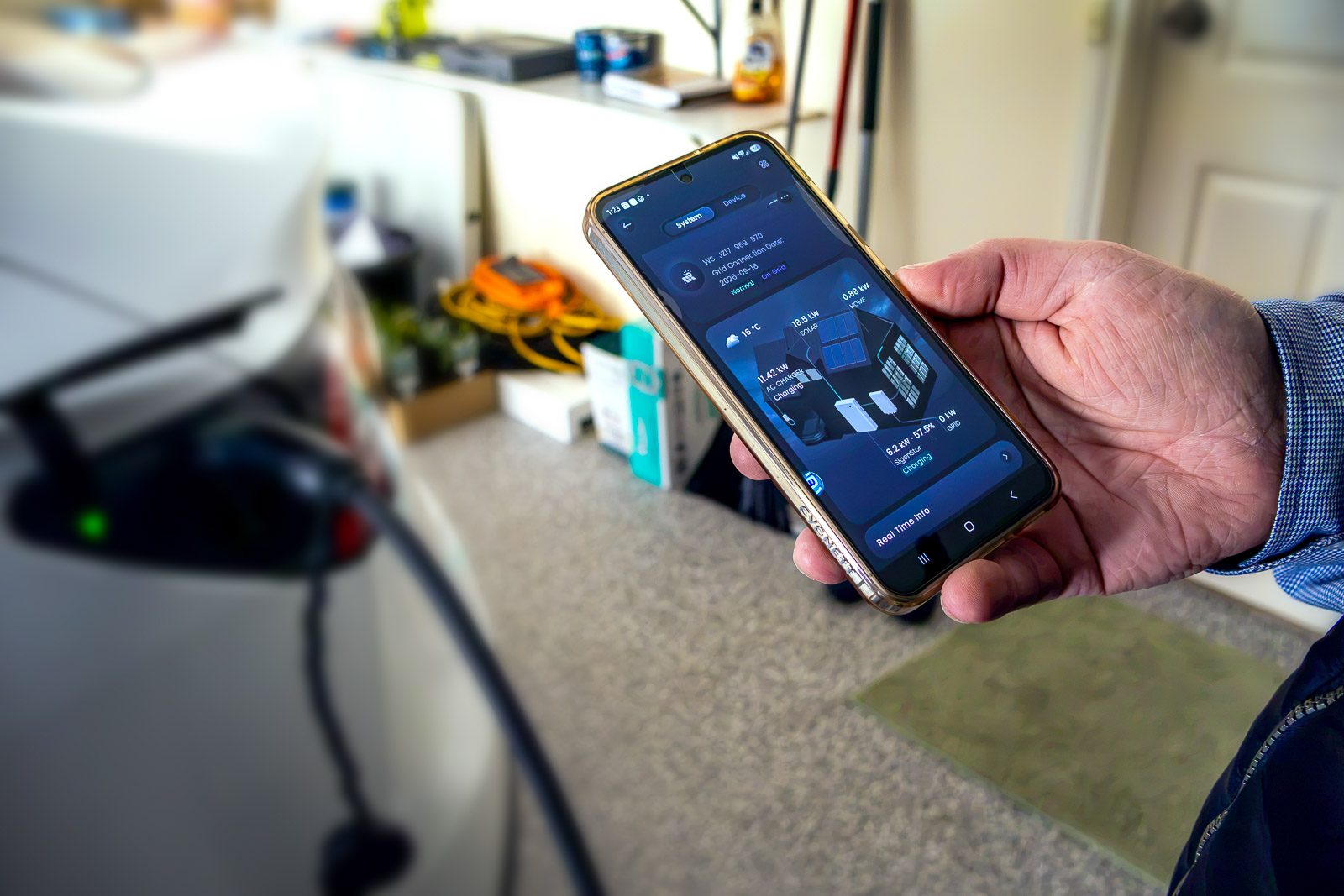
The Sigenergy system provides flexibility in how solar generation and stored electricity can be used throughout the home.
During daylight hours, the solar array is designed to generate electricity to support household consumption, while surplus generation can be directed towards battery storage or other energy demands, subject to system conditions.
Stored energy can then be used later, including during the evening when solar generation is no longer available.
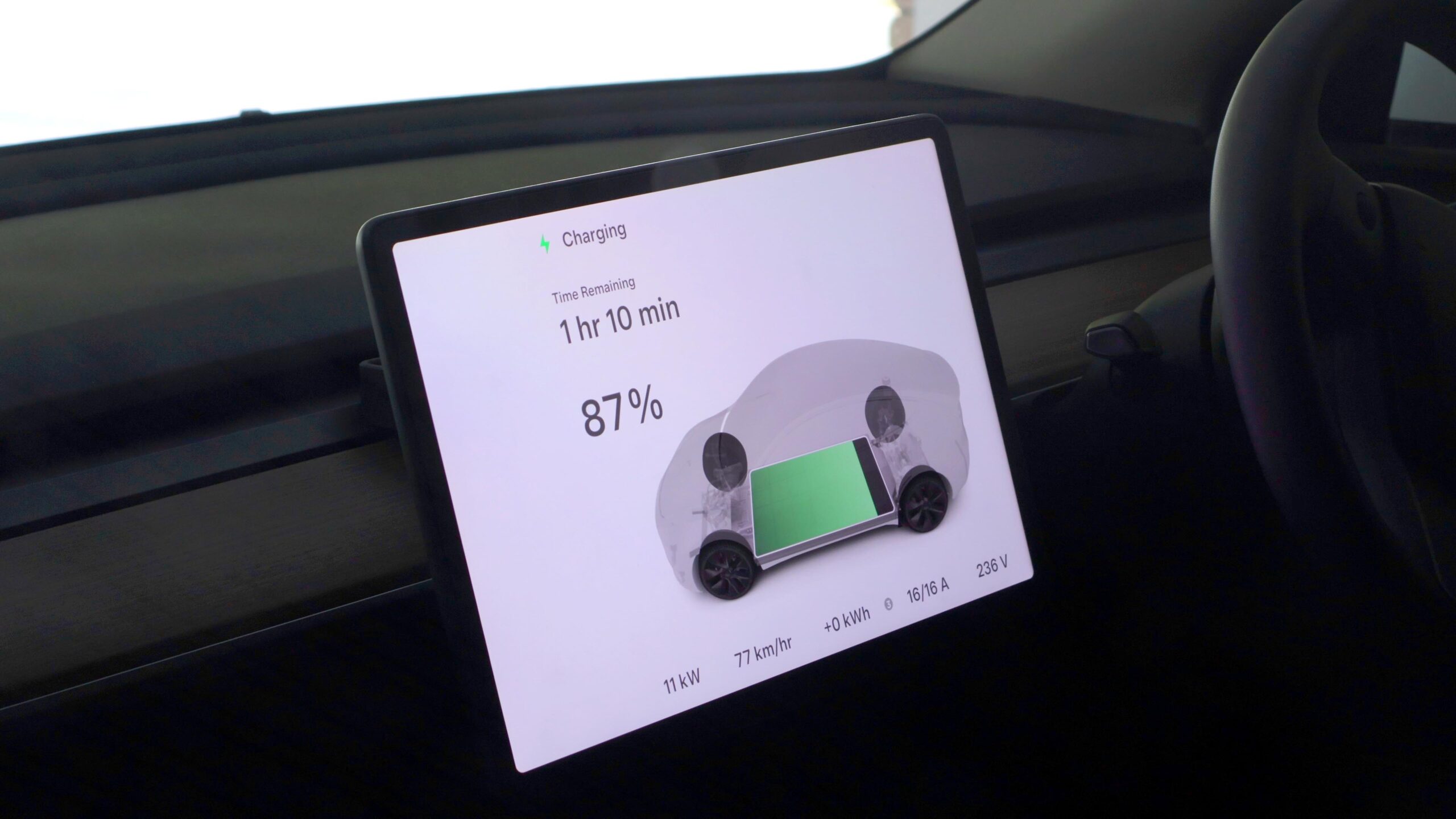
With two electric vehicles also forming part of the household's energy requirements, the team considered vehicle charging in the overall system design.
The property's three-phase electricity supply provides capacity for high-powered EV charging, with Luke identifying the potential for charging both vehicles at up to 22kW each through compatible equipment.
"To have more redundancy there in your solar system and some more battery storage gives flexibility of where that energy comes from to charge his cars." — Luke Vos, Solar Coordinator
The result is a system designed not only around the home's current electricity requirements, but also with flexibility for future energy needs.
Working Together From Consultation to Completion
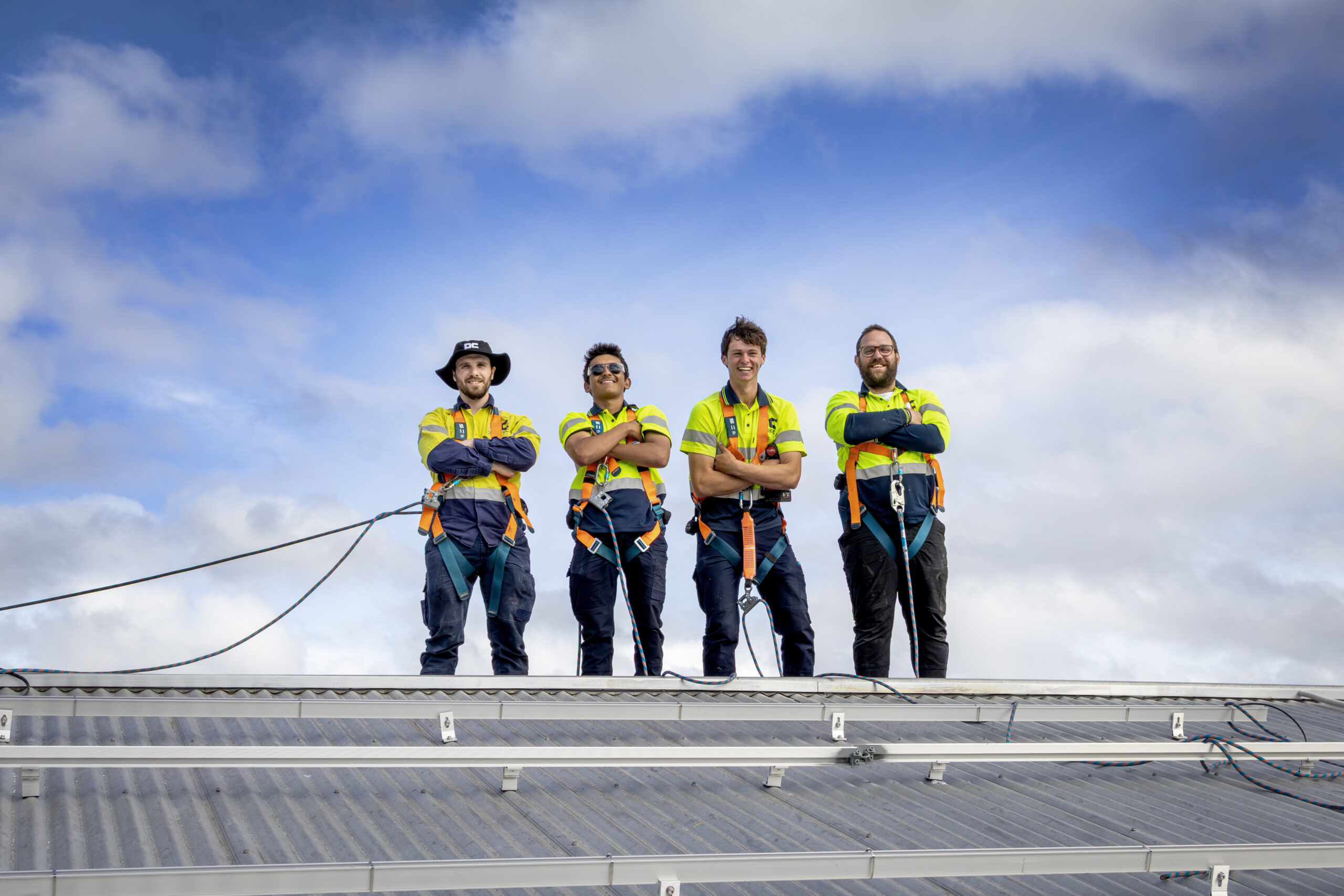
One of the defining features of this project was the collaboration between our Solar and Heating & Cooling teams.
What began as a conversation with Luke about solar quickly expanded into a coordinated project involving multiple services.
For Bill, this meant having a team that could assess the property's energy requirements collectively, rather than approaching each installation as a separate job.
The coordination continued throughout delivery.
The project involved other trades working at the property, roofing works and weather-related delays, requiring flexibility in scheduling and installation.
Our teams were able to adjust their work programs, progressing internal installations when external conditions prevented work elsewhere.
Bill particularly appreciated this approach.
"I thought it was quite clever that when the weather was bad for your teams elsewhere, you were able to come and do the inside parts of the job. To me, that was really impressive."
— Bill, Homeowner
As work progressed, the teams also assisted with additional electrical issues that arose outside the original scope, including problems with power points and switchboard fuses.
This flexibility helped keep the project moving and ensured the household's immediate needs were addressed alongside the larger installation.
The Customer Experience
For Bill, the experience wasn't just about the equipment installed. It was also about the advice, communication and support provided throughout the project.
From the initial discussions through to quotation, design and installation, he appreciated the time the team spent explaining the available options.
"Very impressed with the quotation. It was thorough and very much detailed. I was very surprised with the volume of information that was provided and the length of time that you were prepared to spend with me prior to committing." — Bill, Homeowner
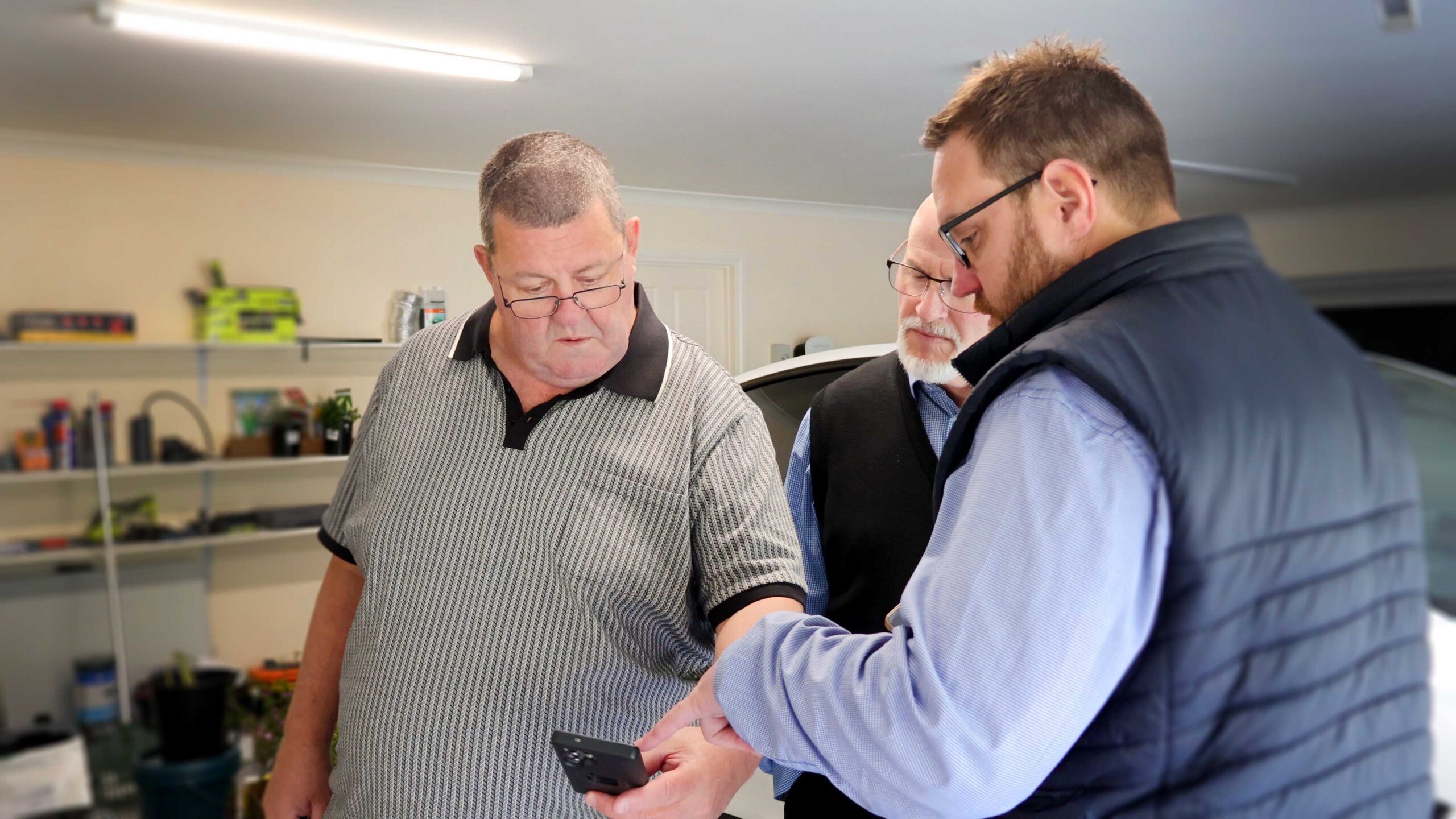
He also highlighted the professionalism of the installation teams, their willingness to answer questions and the way they handled changes throughout the project.
With solar, battery storage and heating all being considered together, Bill was able to make informed decisions about a significant investment in his property.
"We took your advice and we're just delighted with the process."
And when asked what advice he would give other homeowners considering similar work, Bill's response was straightforward.
"If time is important to you, look at Degree C first. Save yourself a lot of frustration and wasting time with less professional outfits." — Bill, Homeowner
The Outcome: A Home Designed for Lower Energy Bills
With the installation complete, Bill's home now has a comprehensive energy system designed to address the very challenges that prompted his original enquiry.
By combining approximately 50kW of solar generation, 48kWh of battery storage and efficient, zoned ducted heating and cooling, we have developed a solution intended to substantially reduce the household's electricity costs.
Importantly, the project wasn't designed simply to offset the home's previous consumption. It was designed to reduce that consumption first.
The system has been sized with the objective of covering the household's expected electricity requirements, including heating and electric vehicle charging, through a combination of solar generation and stored energy.
While actual results will depend on seasonal generation, household usage and operating conditions, the design aims to bring Bill's grid electricity costs as close to zero as practical.
And after a $3,400 quarterly electricity bill, that's a significant change to look forward to.
The completed installation demonstrates the value of considering the whole home when investing in renewable energy.
It also highlights the advantage of having experienced Solar, Heating & Cooling and Electrical teams working together to design a solution that makes sense for the customer, both now and into the future.
Could Your Home Benefit From a Smarter Energy Solution?
Thinking about solar? Before you start counting panels, it pays to understand how your home uses electricity.
At Degree C, our team can assess your household's energy consumption, existing heating and cooling systems, and future requirements to help design a solar solution that works for you.
From rooftop solar and battery storage to energy-efficient heating and EV charging, we can help you make informed decisions about reducing your household running costs.
Book Your Free Solar Assessment
Find out what's possible for your home with a free solar assessment from Degree C.