A Complete Guide for Tasmanian Homeowners
Short answer: Yes. Solar panels absolutely work in winter, including in Tasmania. While they generally produce less electricity than they do during the longer days of summer, they continue generating power whenever there is daylight. In fact, cool temperatures can actually improve the efficiency of solar panels compared to very hot summer days.
For many Tasmanians, the question isn't whether solar works in winter, it's whether it still saves enough money to make it worthwhile. The answer for most homes is yes, provided the system is designed correctly for your property and energy usage.
If you're considering solar panels in Tasmania, this guide explains exactly what you can expect during winter, how Tasmania's climate affects solar generation, and how to maximise your savings year-round.
AT A GLANCE
| Question | Answer |
|---|---|
| Does solar work on cloudy days? | Yes, but it generates less electricity than on bright sunny days. |
| Does Tasmania get enough sun? | Yes. Tasmania receives more than enough annual sunlight for solar to be worthwhile. |
| Will I still have power during winter? | Yes. Solar continues producing electricity every day there's daylight. |
| Does cold weather reduce performance? | No. Solar panels actually operate more efficiently in cooler temperatures. |
| Is winter a bad time to install solar? | No. Installing in winter means you're ready to maximise production during spring and summer. |
The Biggest Myth About Solar in Tasmania
One of the most common misconceptions is:
"Tasmania is too cold and cloudy for solar."
This sounds logical, but it isn't how solar technology works.
Solar panels generate electricity from light, not heat.
That means:
- A bright winter day can produce excellent solar output.
- Cold weather doesn't stop solar panels from working.
- Panels continue generating electricity even when temperatures are close to freezing.
In fact, many people are surprised to learn that extremely hot days can actually reduce a solar panel's efficiency.
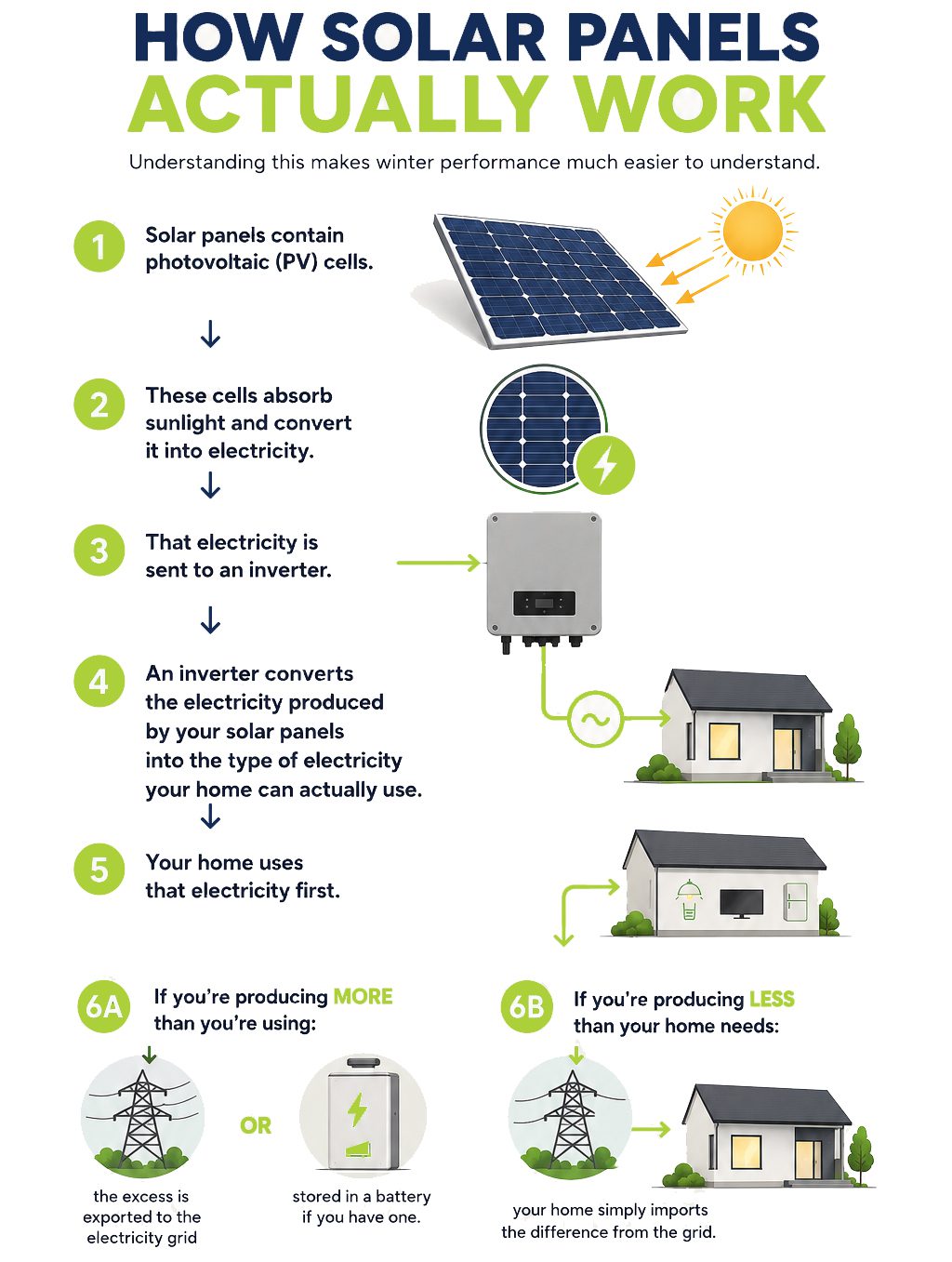
How Solar Panels Actually Work
Understanding this makes winter performance much easier to understand.
Solar panels contain photovoltaic (PV) cells.
These cells absorb sunlight and convert it into electricity.
That electricity is sent to an inverter. An inverter converts the electricity produced by your solar panels into the type of electricity your home can actually use.
Your home uses that electricity first.
If you're producing more than you're using:
- the excess is exported to the electricity grid, or
- stored in a battery if you have one.
If you're producing less than your home needs, your home simply imports the difference from the grid.
Does Solar Produce Electricity on Cloudy Days?
Yes. Clouds reduce the amount of sunlight reaching your panels, but they don't stop production.
Think about being outside on an overcast day.
Even though the sun isn't visible, it's still bright enough to see clearly.
Solar panels use that available light.
Typical production:
| Weather | Approximate Output |
|---|---|
| Bright sunny day | 80–100% |
| Light cloud | 50–80% |
| Heavy overcast | 10–40% |
| Rain | Some production still occurs during daylight |
Why Tasmania Is Actually Well Suited to Solar
People often compare Tasmania to Queensland. That's the wrong comparison.
Solar performance depends on annual solar irradiation (the total amount of sunlight received over a year), not just temperature.
Tasmania receives less sunlight than northern Australia, but still receives plenty to make residential solar financially worthwhile.
Tasmania also has advantages:
- cooler operating temperatures
- high electricity prices
- long summer daylight hours
- increasing household electricity demand
- growing battery adoption
For many homes, the value of each unit of electricity you generate is often more important than producing the absolute highest number of kilowatt-hours.
Why Cold Weather Can Help Solar Panels
This surprises many people - Solar panels prefer cool conditions.
Like most electronics, they become less efficient when they get very hot.
A crisp, sunny Tasmanian winter day can sometimes produce electricity more efficiently than a scorching 38°C day on the mainland.
Cool temperatures reduce electrical resistance inside the panel.
That allows the panel to convert sunlight more efficiently.
Why Winter Production Is Lower
Winter generation drops for three main reasons:
1. Shorter days
There are simply fewer daylight hours.
2. Lower sun angle
The sun sits lower in the sky.
Panels receive sunlight at a different angle.
3. More cloud cover
Tasmania experiences more cloudy weather during winter.
All three reduce total daily production but they don't stop generation.
How Much Less Electricity Will Solar Produce in Winter?
Every home is different. As a rough guide:
Many Tasmanian systems produce around:
- 25–35% of annual generation during winter months
- 65–75% during the rest of the year
Annual production, not one season, is what matters when calculating savings.
A well-designed system is sized to perform over the entire year.
Is Solar Still Worth It if I Use Most Electricity at Night?
It can be. There are several options.
-
Option 1
-
Option 2
-
Option 3
Use appliances during the day
Run:
- dishwasher
- washing machine
- dryer
- pool pump
- hot water system
while solar is generating.
This increases your self-consumption.
Install a battery
A battery stores unused daytime electricity.
You can use that energy during the evening.
Export excess electricity
Unused electricity can be exported to the grid for a feed-in tariff.
A feed-in tariff is the payment your electricity retailer gives you for excess solar electricity sent back to the electricity network.
Is a battery worth it in winter?
The answer depends on:
- your electricity usage
- your retailer
- your electricity tariff
- how much power you use after sunset
A battery generally provides the greatest value if you:
- are home during evenings
- have high overnight electricity use
- want backup power (with compatible systems)
- want greater energy independence
Winter doesn't reduce the value of batteries.
In fact, winter is often when evening electricity costs matter most.

Myth vs Fact
| Myth | Fact |
|---|---|
| Solar doesn't work in winter. | Solar works year-round. Winter simply produces less energy than summer. |
| Solar needs hot weather. | Solar needs sunlight, not heat. |
| Tasmania is too cloudy. | Tasmania has enough annual sunlight for solar to deliver worthwhile savings for many homes. |
| Panels stop working in rain. | They continue generating electricity whenever daylight is available. |
| Cold damages solar panels. | Quality panels are designed for harsh outdoor conditions. |
How to Maximise Solar Performance During Winter
A few simple habits can help you get the most from your system:
✔ Run appliances during daylight hours.
✔ Keep nearby trees trimmed where appropriate to minimise new shading.
✔ Monitor your system through the manufacturer's app to identify unexpected drops in production.
✔ Schedule occasional inspections if you suspect damage or reduced performance.
Who Is Solar Suitable For?
Solar is often a good option for:
- Homeowners with moderate to high electricity bills
- Families using electric heating or heat pumps
- Homes with good roof space
- People planning to stay in their home for several years
- Anyone wanting to reduce their reliance on rising electricity prices
Solar may be less suitable if:
- your roof is heavily shaded throughout the day
- the roof requires major repairs first
- your electricity usage is extremely low
- you plan to move in the immediate future
A site assessment from an experienced installer can help determine whether solar is likely to provide good value for your specific property.
The Bottom Line
Yes, solar absolutely works during winter in Tasmania.
While winter production is lower than summer because of shorter days and more cloud cover, solar panels continue generating electricity whenever there is daylight. Cool temperatures can even improve panel efficiency.
The key to getting the best results isn't hoping for perfect weather—it's choosing a system that's correctly designed for your home, your electricity usage, and Tasmania's unique conditions.
When installed properly, a quality solar system can continue reducing electricity bills throughout winter while delivering the strongest returns over its entire lifespan.
Frequently Asked Questions
1. Does solar work in winter in Tasmania?
Yes. Solar panels generate electricity throughout winter whenever there is daylight.
2. Do solar panels work on cloudy days?
Yes. Cloud cover reduces output but does not stop electricity generation.
3. Does cold weather damage solar panels?
No. Quality panels are designed to operate in cold, wet and windy conditions.
4. Is Tasmania sunny enough for solar?
Yes. Tasmania receives enough annual sunlight for well-designed solar systems to provide meaningful energy savings for many homes.
5. Do solar panels work in the rain?
Yes. They continue producing electricity whenever daylight reaches the panels.
6. How much less power will I generate in winter?
Production varies, but most systems generate less electricity in winter than summer due to shorter days and lower sun angles.
7. Do solar panels need direct sunlight?
No. They perform best in direct sunlight but also generate electricity from indirect light.
8. Does snow damage solar panels?
Generally no. Panels are built to withstand snow, hail and harsh weather within their design specifications.
9. Can I still reduce my electricity bill in winter?
Yes. Any electricity your system generates and you use directly reduces the amount you buy from the grid.
10. Is winter a good time to install solar?
Yes. You'll begin saving immediately and be ready for higher spring and summer production.
11. What happens at night?
Solar panels stop producing electricity after sunset, and your home uses stored battery energy (if installed) or imports electricity from the grid.
12. Will solar power my heater during winter?
It can help offset heating costs during daylight hours, particularly if you use reverse-cycle heat pumps.
13. Are batteries worth adding?
They can be worthwhile for households with high evening electricity use or those seeking backup power, but the economics depend on your usage patterns and electricity tariffs.
14. What is a feed-in tariff?
It's the payment your electricity retailer makes for surplus electricity exported to the grid.
15. How long do solar panels last?
Most quality panels have performance warranties of 25–30 years and can continue producing electricity beyond that.
16. Do solar panels require regular cleaning?
Usually very little. Rain often removes most dust and debris, though occasional inspections are recommended.
17. What if my roof faces east or west?
East- and west-facing roofs can still produce excellent results, especially when matched to your daily energy use.
18. Can trees affect solar performance?
Yes. Shade reduces generation, but thoughtful system design can often minimise its impact.
19. How do I know if solar is right for my home?
A professional assessment of your roof, electricity usage and future plans is the best way to determine suitability. You can book a free quote here.
20. What should I ask before choosing a solar installer?
Ask about system design, product warranties, expected annual production, after-sales support, installation experience and whether the recommendation is tailored to your home rather than a standard package. If you would like a full free energy planning session, you can book that with us online - it's a free service we provide. The survey will take around 15 minutes to complete and then we will get in touch.