If you're wondering how many solar panels you need in Tasmania, the short answer is:
- A small home typically needs 10–14 panels
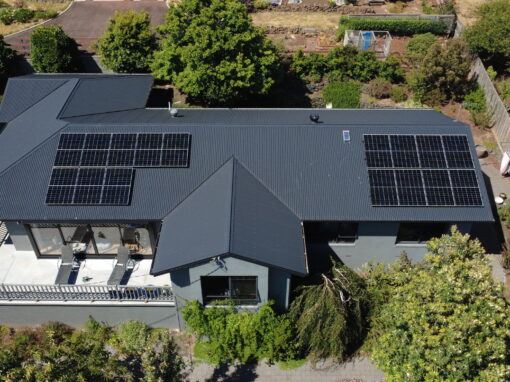
- An average family home usually needs 16–22 panels
- Larger homes with higher electricity use often require 24–32+ panels
However, there isn't a single "right" number of solar panels. The best system depends on your electricity usage, roof size, budget, future plans, and where you live in Tasmania.
Someone in Hobart using 12kWh per day will need a very different system to a family in Devonport with a pool, electric vehicle and heat pump.
This guide explains exactly how to work out the right system size, what affects your solar requirements, and the mistakes to avoid before investing in solar.
Quick Answer: Solar Panel Calculator by Household Size
| Household | Daily Electricity Use | Recommended System | Approximate Number of Panels* |
|---|---|---|---|
| 1–2 people | 8–12 kWh | 4–5kW | 10–12 |
| 2–3 people | 12–18 kWh | 6.6kW | 15–16 |
| Family of 4 | 18–25 kWh | 8–10kW | 18–22 |
| Large family | 25–35+ kWh | 10–13kW | 22–30 |
| High electricity use | 35kWh+ | 13–15kW+ | 30–34+ |
*Based on modern panels around 440–475W each.
Important: These are starting points only. A professional assessment should always consider your roof, electricity bills and future energy needs.
The One Thing That Determines Your Ideal Solar System
Many people assume the size of their house determines how many panels they need.
It doesn't.
The biggest factor is how much electricity you actually use.
For example:
- A retired couple living in a large home may use very little electricity.
- A family of four with ducted heating, heat pump hot water and an EV charger may use three times as much power in a much smaller house.
Your electricity bill tells a much more accurate story than the number of bedrooms.
Step 1: Find Your Daily Electricity Usage
Look at a recent electricity bill.
Find your average daily consumption, shown in kWh (kilowatt-hours).
A kilowatt-hour simply means one unit of electricity.
For example:
- Running a 2,000W heater for one hour uses about 2kWh.
- A dishwasher cycle may use around 1–2kWh.
- A reverse-cycle heat pump is usually much more efficient than electric resistance heating and may use considerably less electricity for the same heating output.
If you cannot find this information, your solar installer can usually estimate it from your bills.
Average Electricity Usage in Tasmania
Although every household is different, these figures provide a useful guide.
| Home Type | Average Daily Usage |
|---|---|
| Small apartment | 6–10 kWh |
| Small home | 10–15 kWh |
| Average family | 18–25 kWh |
| Large family | 25–40 kWh |
| Home with EV | 30–50+ kWh |
Why Tasmania Is Different
A common misconception is that Tasmania isn't suitable for solar because it's colder than mainland Australia.
Temperature and sunshine are not the same thing.
Solar panels generate electricity from light, not heat.
In fact, solar panels often perform more efficiently in cooler temperatures than in extreme heat.
Tasmania also experiences:
- long summer daylight hours
- relatively mild panel temperatures
- strong solar production during much of the year
- some of Australia's highest residential electricity prices, making self-generated electricity valuable.
Winter production is naturally lower because the days are shorter and the sun sits lower in the sky, but well-designed systems continue generating useful electricity throughout the year.
Does Solar Work on Cloudy Days?
Yes.
Solar panels still generate electricity whenever daylight reaches them.
Generation simply reduces depending on cloud cover.
Approximate output:
| Weather | Typical Output |
|---|---|
| Bright sunshine | 80–100% |
| Light cloud | 60–80% |
| Heavy overcast | 10–40% |
| Rain | Reduced but still generating |
Because Tasmania experiences varied weather, systems are designed around annual production, not perfect summer days.
How Modern Solar Panels Affect System Size
Today's panels produce significantly more electricity than those installed ten years ago.
Many quality residential installations now use panels around 440-475 watts.
That means fewer panels are needed to produce the same amount of electricity.
Example:
A 6.6kW system might have:
- 16 × 415W panels (older design), or
- 14–15 × 450-475W panels (modern design).
Higher-output panels can be particularly helpful where roof space is limited.
4–5kW System
6.6kW System
8–10kW System
10–15kW Systems
Suitable for:
- couples
- retirees
- smaller homes
- lower electricity use.
Typically includes around 10–12 panels.
Australia's most common residential system size.
Suitable for:
- average families
- people home during the day
- households wanting meaningful bill reductions.
Typically includes 15–16 panels.
Suitable for:
- larger families
- homes with reverse-cycle heating
- home offices
- growing electricity needs.
Typically includes 18–22 panels.
Suitable for:
- electric vehicle owners
- pools
- multiple heat pumps
- high electricity consumption
- future battery installation.
Typically includes 22–34 panels.
Should You Size for Today or the Future?
One of the biggest mistakes homeowners make is installing a system that's only large enough for today's needs.
Consider whether you plan to add:
- an electric vehicle
- heat pump hot water
- reverse-cycle heating
- battery storage
- home office equipment
- air conditioning
- a pool or spa.
Installing a slightly larger system during the initial installation is often more cost-effective than upgrading later.
What If My Roof Isn't Perfect?
Many people assume solar won't work because of their roof.
My roof faces east.
That could be fine, depending on other factors. East-facing panels do produce more electricity in the morning - but one of our team will talk you through this.
My roof faces west.
That could be fine; west-facing panels often produce more power later in the afternoon, when many households use the most electricity.
My roof faces north.
Traditionally considered ideal in Australia because it generally captures the most sunlight over the course of the day.
My roof has shade.
Shade matters. Even small amounts of regular shading can reduce output. When a consultant does a site inspection, they will talk you through options.
How Much Roof Space Do You Need?
Approximate roof area requirements:
| System Size | Approximate Roof Space |
|---|---|
| 4kW | 18–22m² |
| 6.6kW | 28–35m² |
| 8kW | 35–42m² |
| 10kW | 45–55m² |
| 13kW | 60–70m² |
Should You Get a Battery Too?
A battery stores excess solar electricity for later use.
It can be useful if you:
- use most electricity at night
- want backup capability (with compatible systems)
- are planning for future energy independence
- expect electricity prices to continue rising.
However, batteries are not the right choice for every household today.
Many homeowners choose to install a battery-ready solar system first and add storage later.
Who Is Battery Storage Suitable For?
Battery storage may suit households that:
- are home mostly in the evenings
- have high overnight electricity use
- want to reduce reliance on the grid
- experience frequent power outages (with a system designed for backup)
- are planning to keep their home for many years.
It may be less suitable if:
- most electricity is used during the day
- your electricity bills are already relatively low
- your budget is better spent installing a larger solar array first.

How Much Money Could You Save?
Savings depend on:
- your electricity usage
- when you use power
- system size
- electricity tariffs
- feed-in tariff
- panel orientation
- shading
- future electricity prices.
Homes that use a good proportion of their solar electricity during the day generally achieve the greatest savings.
Does Solar Require Much Maintenance?
Very little. Most systems require:
- occasional visual inspections
- monitoring through an app
- cleaning only when necessary
- professional inspection if performance drops unexpectedly.
Tasmania's rainfall often helps wash away dust and debris, although homes near the coast, farms or heavy tree cover may require more frequent cleaning.
The Installation Process
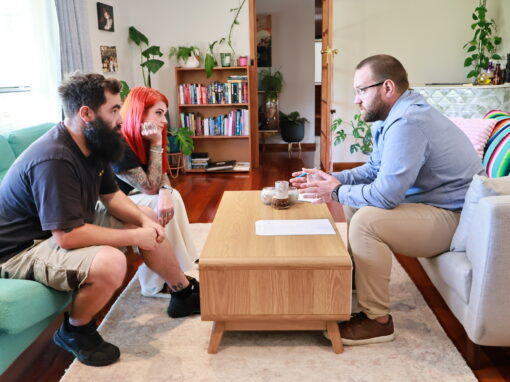
A typical residential installation with us follows these steps:
Review your electricity usage and goals.
Assess your roof, orientation and shading.
We design the most suitable system.
You approve our design and quote.
We prepare the required approvals and paperwork.
Installation by our experienced team.
Test and commission the system.
Connect monitoring so you can track performance.
Arrange grid connection and final approvals where required.
Common Mistakes When Choosing a Solar System
Avoid these common pitfalls:
- Choosing solely on price.
- Buying a system that's too small.
- Ignoring future electricity needs.
- Not considering roof shading.
- Comparing systems without looking at panel and inverter quality.
- Focusing only on feed-in tariffs rather than self-consumption.
- Choosing an installer without checking licensing, accreditation, warranties and after-sales support.
Checklist: Before You Request a Solar Quote
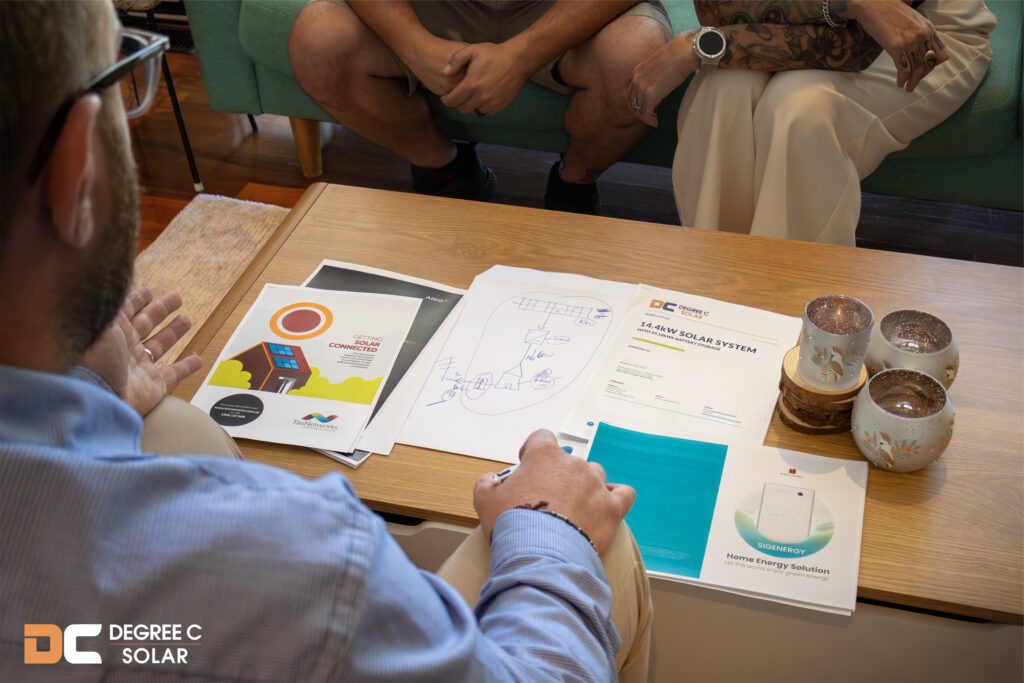
Before meeting with our solar installer, gather:
- Your most recent electricity bills.
- Information about planned future purchases (such as an EV or heat pump).
- Any known roof plans or recent renovations.
- Questions about batteries, monitoring or blackout protection.
- Your priorities, whether they're reducing bills, lowering emissions or planning for the future.
Having this information helps ensure your system is designed around your actual needs.
Myth vs Fact
| Myth | Fact |
|---|---|
| Tasmania isn't sunny enough for solar. | Solar panels generate electricity from daylight, not heat, and Tasmania has excellent solar potential for well-designed systems. |
| Solar doesn't work in winter. | Winter production is lower than summer, but systems continue generating electricity throughout the year. |
| Panels will damage my roof. | Correctly installed systems are designed to protect roof integrity and comply with Australian standards. |
| Bigger is always better. | The right size depends on your electricity use, roof and future plans. |
| Batteries are essential. | Many households benefit from solar without a battery. Batteries suit some situations more than others. |
| Solar gives you power during a blackout. | Standard grid-connected systems shut down during outages unless backup capability is included. |
Helpful External Resources
For independent information, these organisations provide reliable advice:
- Clean Energy Council (CEC)
- Australian Government – energy.gov.au
- Solar Quotes
- Your electricity retailer for current feed-in tariff information.
Frequently Asked Questions
1. How many solar panels does the average Tasmanian home need?
Most family homes require between 16 and 22 modern solar panels, depending on electricity usage and panel wattage.
2. Is a 6.6kW solar system big enough?
For many households, yes. It remains one of the most common residential system sizes, but higher electricity users may benefit from a larger system.
3. How many panels are in a 10kW solar system?
Typically between 22 and 24 panels, depending on their wattage.
4. Is Tasmania sunny enough for solar?
Yes. Solar panels generate electricity from daylight, and Tasmania receives enough solar irradiation for well-designed systems to perform effectively year-round.
5. Will solar reduce my electricity bill?
For many households, yes. The amount depends on your electricity use, system size, tariff and how much of your solar energy you use yourself.
6. Can I add more panels later?
Sometimes, but it depends on your inverter capacity, roof space and electrical design. Planning ahead during the initial installation is often more cost-effective.
7. Does snow affect solar panels in Tasmania?
Snow is uncommon in most populated Tasmanian areas. If panels are briefly covered, production pauses until the snow melts or slides off.
8. How much roof space do I need?
A typical 6.6kW system generally requires around 28–35 square metres, although layouts vary.
9. Are premium panels worth paying for?
Premium panels may offer higher efficiency, stronger warranties and better long-term performance, particularly where roof space is limited.
10. What happens if one panel stops working?
The impact depends on the system design. Monitoring systems often identify faults, allowing repairs before they significantly affect overall performance.
11. How do I know if my roof is suitable for solar?
A professional assessment considers orientation, pitch, shading, roof condition and available space.
12. Will solar damage my roof?
A properly installed system should not damage a structurally sound roof.
13. Should I install a battery now or later?
That depends on your budget, electricity usage and goals. Many homeowners install a battery-ready solar system first.
14. Can solar power my entire house?
It can offset a large portion of your electricity use, but you'll still rely on the grid when solar production isn't enough unless you have suitable battery storage.
15. How long is the installation?
Many residential installations are completed in a single day, though larger systems may take longer.
16. Do solar panels need cleaning?
Usually very little. Rainfall often keeps them reasonably clean, but periodic inspection is recommended.
17. Will trees affect solar performance?
Yes. Regular shading can reduce output, so it's important to assess nearby vegetation during system design.
18. What's the difference between string inverters and microinverters?
A string inverter connects multiple panels together and suits many roofs. Microinverters are installed on individual panels and can be advantageous where shading or multiple roof orientations are involved.
19. What size inverter do I need?
Your installer will recommend an inverter that matches your panel capacity, electricity needs and applicable Australian standards.
20. Can I install solar if I plan to sell my home?
Yes. A quality solar system can be an attractive feature for many buyers, particularly as energy costs continue to rise.
21. Should I oversize my solar system?
If you expect your electricity use to increase over the next decade, a modestly larger system can often provide better long-term value.
22. Is solar still worthwhile if I'm away during the day?
It can be, but households that use more electricity during daylight hours often achieve higher savings. Timers and smart appliances can also help increase self-consumption.
23. Can solar panels withstand Tasmanian weather?
Quality solar panels are designed and tested to withstand Australian weather conditions, including wind, rain and hail, when installed correctly.
24. How often should I check my monitoring app?
A quick monthly check is usually enough to confirm your system is performing as expected.
25. What information should I have ready before requesting a quote?
Have your recent electricity bills, details of any planned future electrical upgrades (such as an EV or heat pump), and any questions about batteries or backup power. This helps your installer recommend a system that suits your home rather than relying on generic assumptions.